Generic vs Branded Medicines: What's the Difference?
When you visit a pharmacy, you may notice that the same medicine is available under different names and at different prices. One option may be a well-known branded medicine, while another is a generic medicine that costs much less. This often raises an important question:
Are generic medicines as effective as branded medicines?
Many people believe that expensive medicines work better. Others think generic medicines are lower in quality because they are more affordable. In reality, the difference is not as simple as price. Both generic and branded medicines are designed to treat the same health conditions, and in most cases, they contain the same active ingredient, strength, dosage, and intended use.
Understanding the difference between generic medicine vs branded medicine can help you make informed healthcare decisions. It can also help you reduce medical expenses without compromising on safety or effectiveness.
Governments and healthcare organizations around the world encourage the use of approved generic medicines because they provide affordable treatment while maintaining strict quality standards. However, there are still many myths and misconceptions surrounding generic medicines.
In this guide, you will learn:
What branded medicines are
What generic medicines are
The key differences between them
Their benefits and limitations
Which option may be suitable for you
Common myths about generic medicines
By the end of this article, you will have a clear understanding of how generic and branded medicines compare, allowing you to make better decisions for yourself and your family.
What Are Branded Medicines?
Branded medicines are the original medicines developed by pharmaceutical companies after years of scientific research, laboratory testing, and clinical trials. Before a new medicine reaches patients, it must go through a long approval process to prove that it is safe, effective, and of high quality.
When a pharmaceutical company discovers a new drug, it receives a patent that gives it exclusive rights to manufacture and sell that medicine for a specific period. During this time, no other company can legally produce the same medicine. This exclusivity allows the company to recover the significant costs spent on research, development, and clinical testing.
Branded medicines are sold under a unique brand name, making them easy for doctors, pharmacists, and patients to recognize.
Examples of Branded Medicines
Some commonly known branded medicines include:
Crocin
Augmentin
Calpol
Allegra
Dolo 650
These medicines are trusted by millions of people and are widely prescribed by healthcare professionals.
Why Are Branded Medicines More Expensive?
Branded medicines usually cost more because pharmaceutical companies invest heavily in:
Drug research and discovery
Clinical trials
Regulatory approvals
Product development
Marketing and advertising
Brand promotion
These investments increase the overall cost of bringing a medicine to market, which is reflected in its selling price.
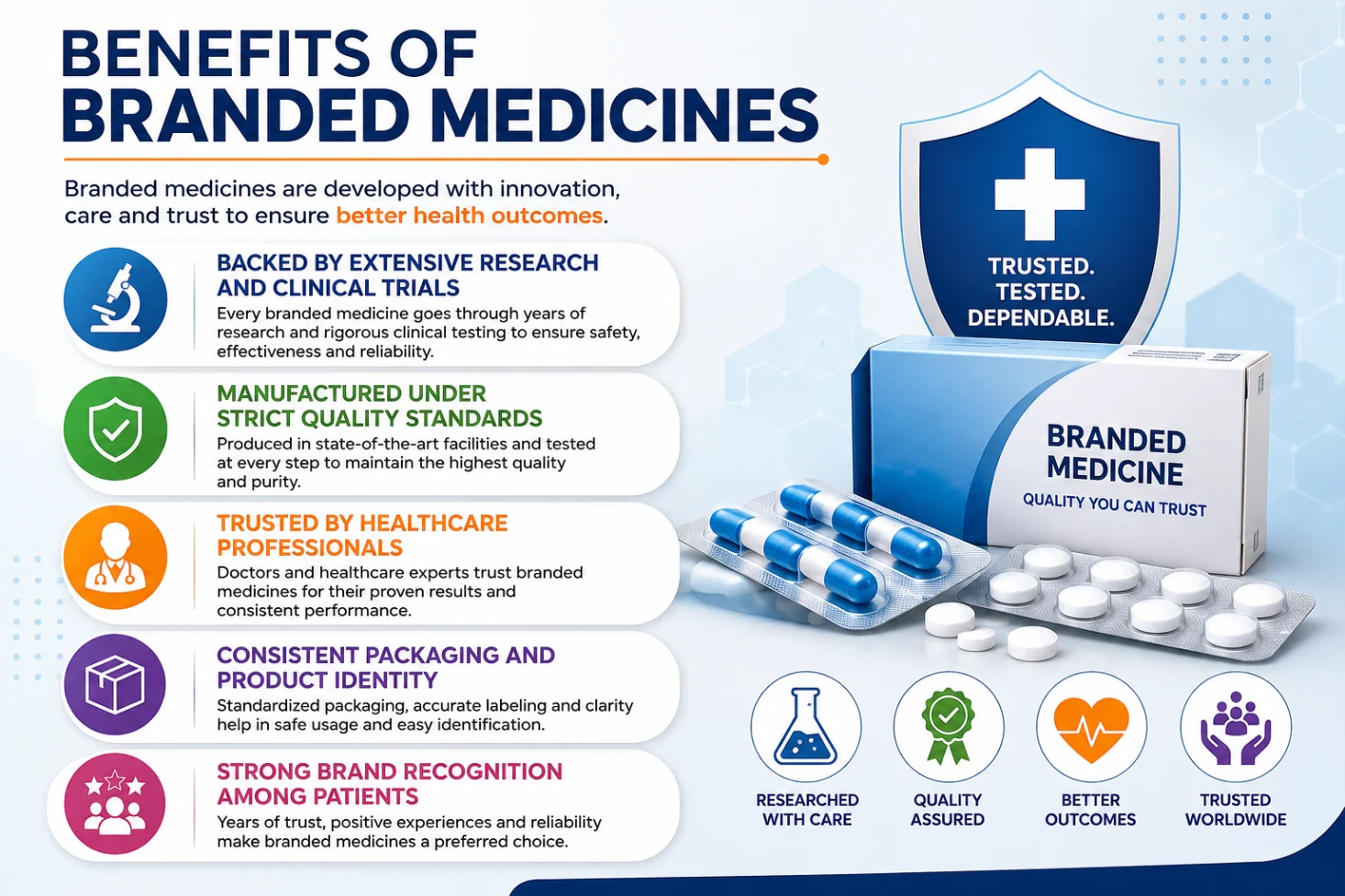
Benefits of Branded Medicines
Branded medicines offer several advantages:
Backed by extensive research and clinical trials
Manufactured under strict quality standards
Trusted by healthcare professionals
Consistent packaging and product identity
Strong brand recognition among patients
Although branded medicines may cost more, many patients prefer them because they are familiar with the brand and have confidence in its reputation.
What Are Generic Medicines?
Generic medicines are medicines that are introduced after the patent for a branded medicine expires. Once the patent period ends, other pharmaceutical companies are allowed to manufacture and sell the same medicine using its generic name.
A generic medicine contains the same active ingredient, strength, dosage form, route of administration, and intended use as the branded version. This means it works in the same way and provides the same therapeutic effect when used correctly.
Before reaching the market, generic medicines must meet strict quality, safety, and effectiveness standards established by regulatory authorities. They must also demonstrate bioequivalence, which means the medicine enters the bloodstream at the same rate and delivers the same clinical benefits as the branded medicine.
Why Are Generic Medicines More Affordable?
Generic medicine manufacturers do not have to invest in the original research and development of the drug. They can produce the medicine after the patent expires, allowing them to reduce manufacturing costs and offer the medicine at a lower price.
Lower prices do not mean lower quality. Instead, they reflect lower development and marketing expenses.
Benefits of Generic Medicines
Generic medicines provide several important advantages:
 Affordable for patients and families
Same active ingredients as branded medicines
Equivalent safety and effectiveness
Approved by regulatory authorities
Suitable for long-term treatment
Widely available at licensed pharmacies
Because of these benefits, healthcare professionals often recommend generic medicines whenever appropriate.
Generic vs Branded Medicines: Key Differences
Although generic medicines and branded medicines are used to treat the same medical conditions, many people assume they are completely different. In reality, the biggest differences are usually related to branding, price, and marketing—not the medicine itself.
Both types of medicines must meet strict quality standards before they reach patients. They are manufactured under regulated conditions and are designed to deliver the same therapeutic results when taken correctly.
The table below highlights the major differences.
Feature | Generic Medicines | Branded Medicines |
Active Ingredient | Same as branded medicine | Original active ingredient |
Effectiveness | Equivalent | Equivalent |
Safety | Government approved | Government approved |
Dosage Strength | Same | Same |
Quality Standards | Same regulatory standards | Same regulatory standards |
Price | More affordable | Usually more expensive |
Packaging | Simple packaging | Premium branded packaging |
Marketing | Limited | Extensive marketing |
Availability | Widely available | Widely available |
From a medical perspective, the active ingredient is what treats the condition. Whether the medicine is generic or branded, the active ingredient performs the same function in the body.
The differences that patients usually notice such as packaging, tablet color, or price do not necessarily affect how the medicine works.
Are Generic Medicines as Effective as Branded Medicines?
One of the most common myths is that generic medicines are less effective because they cost less. Scientific research and regulatory guidelines show that this belief is incorrect.
Approved generic medicines contain the same active ingredient, strength, dosage form, and route of administration as the branded medicine. They are required to demonstrate bioequivalence, meaning they release the medicine into the body at a similar rate and provide the same therapeutic effect.
Before approval, generic medicines undergo strict quality checks to ensure they meet the required standards for safety, effectiveness, and manufacturing.
For most common medical conditions, patients can expect similar treatment outcomes from both generic and branded medicines when taken as prescribed.
However, in certain situations involving highly specialized medicines, your doctor may recommend a specific brand. Always follow your healthcare provider's advice before changing any prescribed medication.
Why Doctors Recommend Generic Medicines
Doctors may prescribe generic medicines because they:
Offer the same clinical benefits.
Help reduce treatment costs.
Improve access to long-term medications.
Meet approved quality standards.
Are widely available.
For patients who require medicines for conditions such as diabetes, hypertension, or thyroid disorders, switching to approved generic alternatives can significantly lower healthcare expenses over time.
Why Are Generic Medicines Cheaper?
Many people associate higher prices with better quality. However, medicine pricing works differently.
Generic medicines are less expensive because manufacturers do not need to repeat the expensive research, clinical trials, and product development already completed by the original pharmaceutical company.
After a patent expires, approved manufacturers can produce the same medicine using the existing scientific information while still following strict manufacturing standards.
Several factors contribute to the lower cost.
No Research and Development Costs
Developing a new medicine can take many years and require significant financial investment. Generic manufacturers do not bear these original research costs.
No Patent Expenses
Once the patent period ends, multiple companies can manufacture the medicine, increasing competition in the market.
Lower Marketing Costs
Branded medicines often involve television advertisements, medical conferences, promotional campaigns, and sales representatives.
Generic medicines rely less on advertising, helping reduce overall costs.
Healthy Market Competition
When several manufacturers produce the same medicine, competition naturally leads to lower prices while maintaining quality.
Lower prices benefit patients without reducing the effectiveness of treatment.
Benefits of Generic Medicines
Generic medicines have become an important part of modern healthcare because they provide effective treatment at a lower cost.
Affordable Healthcare
Lower prices make medicines accessible to more people, especially patients managing long-term conditions.
Same Active Ingredient
Generic medicines contain the same active ingredient and dosage strength as the branded version.
Proven Safety
Every approved generic medicine must meet established safety and manufacturing standards.
Better Accessibility
Because they are affordable, patients are more likely to continue their prescribed treatment without interruption.
Supports Long-Term Treatment
People with chronic illnesses often require medicines for months or years. Generic medicines help reduce the financial burden associated with long-term therapy.
Benefits of Branded Medicines
Branded medicines continue to play an important role in healthcare, particularly when new treatments become available.
Extensive Research
Original pharmaceutical companies invest years in discovering and testing new medicines before introducing them to the market.
Strong Brand Recognition
Healthcare professionals and patients often recognize branded medicines because of their long history and established reputation.
Consistent Product Identity
Branded medicines usually have consistent packaging, appearance, and product information, making them easier to identify.
Continuous Innovation
Revenue from branded medicines supports future medical research and the development of new therapies for different diseases.
Trusted by Healthcare Professionals
Many doctors prescribe branded medicines based on clinical experience, patient history, and individual treatment requirements.
Generic vs Branded Medicines in India
India is one of the world's largest producers of medicines and plays a significant role in supplying affordable healthcare products globally. Patients in India can choose between branded medicines and approved generic medicines for many common health conditions.
The Central Drugs Standard Control Organization (CDSCO) regulates medicines sold in India to ensure they meet safety, quality, and effectiveness standards. Manufacturers must follow Good Manufacturing Practices (GMP) and obtain the necessary approvals before their medicines reach pharmacies.
The Government of India also promotes the use of generic medicines through initiatives like the Pradhan Mantri Bhartiya Janaushadhi Pariyojana (PMBJP). Janaushadhi Kendras provide quality generic medicines at affordable prices, helping patients reduce healthcare expenses.
However, branded medicines continue to be widely prescribed because of brand recognition, doctor familiarity, and patient preference. Ultimately, the choice between a branded or generic medicine should always be based on your doctor's advice and your healthcare needs.
Why Generic Medicines Are Becoming More Popular in India
Lower treatment costs
Government support through Janaushadhi stores
Same active ingredients as branded medicines
Strict quality and safety regulations
Better access to healthcare for all income groups
As awareness grows, more patients are choosing approved generic medicines without compromising on treatment quality.
Common Myths About Generic Medicines
Despite their widespread use, several misconceptions about generic medicines still exist. Understanding the facts can help patients make informed healthcare decisions.
Myth 1: Generic Medicines Are Less Effective
Fact: Approved generic medicines contain the same active ingredient, strength, and dosage as branded medicines. They provide the same therapeutic benefits when used correctly.
Myth 2: Lower Price Means Lower Quality
Fact: Generic medicines are cheaper because manufacturers do not spend money on the original research, patents, or extensive marketing campaigns. Lower cost does not mean lower quality.
Myth 3: Doctors Do Not Trust Generic Medicines
Fact: Many doctors prescribe generic medicines, especially for long-term treatments, because they are safe, effective, and affordable.
Myth 4: Generic Medicines Work More Slowly
Fact: Generic medicines are required to demonstrate bioequivalence, meaning they work at the same rate as branded medicines.
Myth 5: Generic Medicines Are Not Tested
Fact: Every approved generic medicine must meet strict manufacturing, quality, and safety standards before being sold.
Patients should always rely on medical advice and verified information rather than common misconceptions.
Tips Before Buying Medicines
Whether you choose a generic or branded medicine, following safe purchasing practices is essential for effective treatment.
Buy Medicines from Licensed Pharmacies
Always purchase medicines from a trusted and licensed pharmacy to ensure you receive genuine products.
Follow Your Doctor's Prescription
Do not replace or stop medicines without consulting your doctor or pharmacist.
Check the Expiry Date
Before using any medicine, verify that it has not expired and that the packaging is intact.
Read the Medicine Label
Review the dosage instructions, storage requirements, and any precautions before taking the medicine.
Ask Questions
If you are unsure about a medicine, speak with your pharmacist. They can explain how to take it correctly, possible side effects, and storage instructions.
Avoid Self-Medication
Taking medicines without proper medical advice can lead to unwanted side effects or incorrect treatment.
Following these simple steps helps ensure safe and effective use of medicines.
Conclusion
Choosing between generic medicines and branded medicines does not have to be confusing. Both are designed to treat the same medical conditions and, when approved by regulatory authorities, contain the same active ingredients, dosage strength, and intended use.
The primary differences usually involve price, branding, and marketing rather than quality or effectiveness. Generic medicines offer an affordable option for many patients, while branded medicines continue to provide trusted treatment backed by extensive research and strong brand recognition.
The right choice depends on your doctor's recommendation, your medical condition, and your personal preferences. Never change your prescribed medication without consulting a qualified healthcare professional.
At Hello Health Pharmacy, we believe informed patients make better healthcare decisions. Our experienced pharmacists are always available to answer your questions, explain your medicines, and help you choose the right treatment based on your prescription.
Frequently Asked Questions (FAQs)
1. Are generic medicines as safe as branded medicines?
Yes. Approved generic medicines must meet the same quality, safety, and effectiveness standards as branded medicines.
2. Why do generic medicines cost less?
Generic manufacturers do not spend on the original research, patents, or large marketing campaigns, allowing them to sell medicines at lower prices.
3. Can I replace a branded medicine with a generic medicine?
Only after consulting your doctor or pharmacist. They can advise whether an approved generic alternative is suitable for your treatment.
4. Are generic medicines approved in India?
Yes. Generic medicines sold in India must comply with regulations set by the Central Drugs Standard Control Organization (CDSCO).
5. Which is better: generic or branded medicines?
Both are effective when approved by regulatory authorities. The best choice depends on your doctor's advice, availability, and healthcare needs.